The “Doorway Decompress” Routine: A 2-Minute Habit That Can Cut Post-Work Stress Before It Spills at Home
A small “transition ritual” at your front door can help your brain switch off work mode—before stress leaks into dinner, sleep, or relationships.
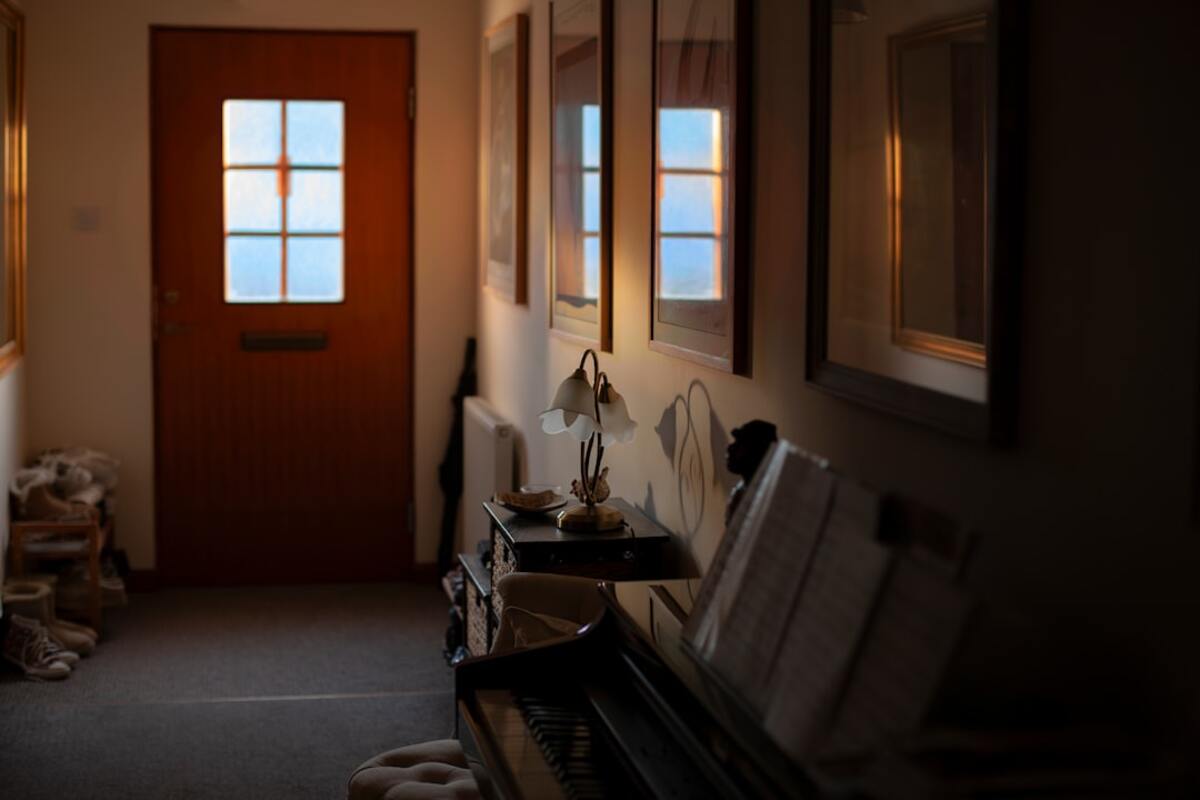
- Your brain needs a clear “work to home” signal—especially with remote or hybrid work.
- A 2-minute doorway routine (phone, breath, body, intention) can lower stress spillover fast.
- Small tweaks—like a landing zone for keys and a script for hard days—make it stick.
Why stress follows you home (even when your laptop stays shut)
Picture this: you close your laptop, walk into the kitchen, and someone asks an innocent question—“What do you want for dinner?”—and you feel your body tighten like you’ve just been given a deadline. You’re not “overreacting.” You’re still in work mode.
Our brains love context. When you repeatedly handle urgent messages, problem-solving, and performance pressure in the same spaces where you’re supposed to rest (hello, dining table desk), the lines blur. The result is a common prevention problem: stress spillover—work tension leaking into home time, sleep, and relationships.
In the past, commutes forced a transition. Even a short walk from the bus stop gave your nervous system time to downshift. Now, many people go from “meeting mode” to “family mode” in one step—sometimes literally from one room to the next.
The good news: you can manufacture a transition with a tiny, repeatable ritual. Think of it like rinsing a paintbrush before switching colors. You’re not erasing your day; you’re preventing it from tinting the rest of your evening.

The “Doorway Decompress” routine (2 minutes, no equipment)
This routine is designed to happen at a single consistent “threshold”: your front door, your apartment hallway, the spot where you park, or even the moment you close your work laptop. The goal is to teach your brain: when I do this, the work chapter ends.
Use the sequence below for one week. Keep it short on purpose—you’re more likely to repeat something that doesn’t feel like homework.
| Step | What to do (30 seconds each) | Why it helps |
|---|---|---|
| 1) Park the phone | Put your phone on silent and place it in a specific “landing zone” (pocket, shelf, bag). | Stops work pings from re-triggering “urgent mode.” Gives your attention a boundary. |
| 2) Drop the shoulders | Exhale slowly, then shrug your shoulders up and let them fall. Repeat twice. | Many people carry stress in the neck/jaw. This signals “safe enough to release.” |
| 3) One slow breath pattern | Try 4 seconds in, 6 seconds out for 5 breaths. (If 4/6 feels hard, do 3/5.) | Longer exhales nudge the body toward calmer physiology—like easing off the gas. |
| 4) Name the day | Say (out loud or silently): “Today was ___.” Pick one word: “busy,” “tense,” “productive,” “weird.” | Naming your state can reduce mental looping. It turns a fog into a label. |
| 5) Choose the next chapter | Say: “Now I’m switching to home mode.” Add one intention: “I’ll be patient,” “I’ll be present,” or “I’ll rest.” | Gives your brain a direction, not just a stop sign. |
If you’re thinking, “This sounds too simple,” that’s the point. Prevention habits work when they’re easy to do on the days you need them most—like when you’re already depleted.
Real-life scenario: Maya works in customer support and ends her day with tense calls. Before she started the routine, she’d walk straight into the living room still braced for confrontation—so a small annoyance (shoes in the hallway) felt huge. Now she does the Doorway Decompress in her entryway. It doesn’t make her day perfect, but it often prevents the first five minutes at home from turning into an argument.
Make it stick: set up your “landing zone” and remove friction
The routine works best when your environment supports it. You’re building a cue-and-response loop: arrive → decompress → enter. Here are simple setup tweaks that make repeating the habit much more likely.
- Create a physical landing zone: a bowl, hook, or small tray for keys/ID/earbuds. When your hands do the same thing every day, your brain catches on faster.
- Use a “work off” signal: if you work from home, close your laptop and put it away (even into a drawer). Leaving it open is like leaving the office door ajar.
- Choose one doorway: if you have multiple entrances, pick the one you use most. Consistency beats complexity.
- Pair it with an existing habit: for example, do the breath pattern while taking off shoes or washing hands. That way it doesn’t feel like “one more thing.”
- Decide your “minimum version” for chaotic days: on the hardest days, do only: phone silent + one long exhale + “home mode.” That’s still a win.
One of the most underestimated stressors is the micro-chaos right after you arrive—bags on the floor, notifications buzzing, everyone talking at once. The routine creates a tiny buffer so your nervous system isn’t forced to handle everything at full volume.
Analogy: Think of it like wiping your feet at the door. You’re not judging the outside world for being muddy. You’re just preventing it from being tracked onto the carpet.
Common obstacles (and how to adapt without giving up)
Prevention routines fail when they’re designed for a “perfect” day. Here are common real-world snags—and flexible fixes.
Make the routine visible and brief: one hand on the doorknob, one slow exhale, shoulders drop, then greet. You can even say, “Give me 20 seconds to land.” Many people respond well when they know what’s happening.
Make the routine visible and brief: one hand on the doorknob, one slow exhale, shoulders drop, then greet. You can even say, “Give me 20 seconds to land.” Many people respond well when they know what’s happening.
Create a symbolic threshold: the moment you shut your laptop, step into a different room, or even stand up and touch a specific wall or window. Some people use a short walk around the block as their “commute replacement.” The key is repetition in the same sequence.
Create a symbolic threshold: the moment you shut your laptop, step into a different room, or even stand up and touch a specific wall or window. Some people use a short walk around the block as their “commute replacement.” The key is repetition in the same sequence.
You don’t have to ban the phone—just prevent it from being a work trigger. Try a 10-minute delay before opening email/Slack, or switch to a non-work screen first (music, a podcast, a recipe). The routine is about choice, not restriction.
You don’t have to ban the phone—just prevent it from being a work trigger. Try a 10-minute delay before opening email/Slack, or switch to a non-work screen first (music, a podcast, a recipe). The routine is about choice, not restriction.
Skip the counting and use a simpler cue: exhale like you’re fogging a mirror, or hum gently for 10–15 seconds (humming naturally lengthens exhale). If slow breathing ramps up anxiety, keep it neutral: shoulders drop + unclench jaw + soften hands.
Skip the counting and use a simpler cue: exhale like you’re fogging a mirror, or hum gently for 10–15 seconds (humming naturally lengthens exhale). If slow breathing ramps up anxiety, keep it neutral: shoulders drop + unclench jaw + soften hands.
One more helpful adaptation: keep a short “script” for rough days. Stress often spikes when you feel you have to perform calmness immediately. A script gives you a bridge.
- For partners/family: “I’m glad to be home. I need two minutes to reset, then I’m yours.”
- For yourself: “Nothing else gets decided right now. First I land.”
- For roommates: “Quick reset—then I’ll tell you about my day.”
This is prevention in a very everyday sense: you’re not trying to eliminate stress from life. You’re reducing how much it spreads into the hours that are supposed to restore you.
If you want to make the habit more “real,” anchor it to a sensory cue that feels like arriving: washing hands with warm water, changing into comfortable clothes, stepping onto a small mat, or turning on one specific lamp. The brain remembers rituals better when they have a consistent signal.
And if you miss a day? Treat it like skipping floss once—no drama, no reset ceremony. Just do it the next time you cross your threshold.